
Portugal's boutique hotel market is booming. Between Lisbon's design-forward guesthouses, the Algarve's converted quintas, and the Alentejo's rural retreats, there's never been more competition for travellers' attention, or more opportunity to stand out.
But here's what most hotel owners get wrong: they treat branding as "making things look nice." A new logo, some pretty Instagram posts, maybe a website refresh. Then they wonder why bookings stay flat.
Branding isn't decoration. It's the strategic clarity that makes your hotel the obvious choice for the guests you actually want to attract. Done right, branding becomes your most valuable asset, more important than your Booking.com listing or your location.
Here's how to brand a boutique hotel in Portugal properly, from someone who's done it multiple times.
Why Branding Matters More Than Ever for Portuguese Hotels
The Portuguese hospitality market has changed dramatically. Ten years ago, being in a good location with decent rooms was enough. Today, travellers have endless options: boutique hotels, design-led guesthouses, renovated manor houses, high-end Airbnbs, eco-lodges, and glamping sites.
Your competition isn't just the hotel down the street. It's every other experience competing for the same traveller's booking decision.
The challenge: Standing out when everyone's using the same Booking.com template, the same generic "boutique hotel" language, the same stock photos.
The solution: A clear brand that communicates why your hotel exists, who it's for, and what makes it different, before the guest even walks through the door.
Step 1: Define Your Brand Strategy (Before You Touch Design)
Most hotels skip this step and jump straight to logo design. Big mistake. Brand strategy is the foundation that makes everything else work.
1. Start With Your Positioning.
Ask yourself: What role does your hotel play in the guest's journey? Are you:
- The destination itself? (Guests come for the hotel experience, spa, food, activities)
- The gateway? (You're the comfortable base for exploring a region, Sintra, Douro Valley, Costa Vicentina)
- The authentic local experience? (You connect guests to Portuguese culture, food, and traditions)
- The design statement? (Architecture and interiors are the experience)
Your positioning determines everything: your pricing, your marketing, your interior design decisions, and even which booking platforms matter.
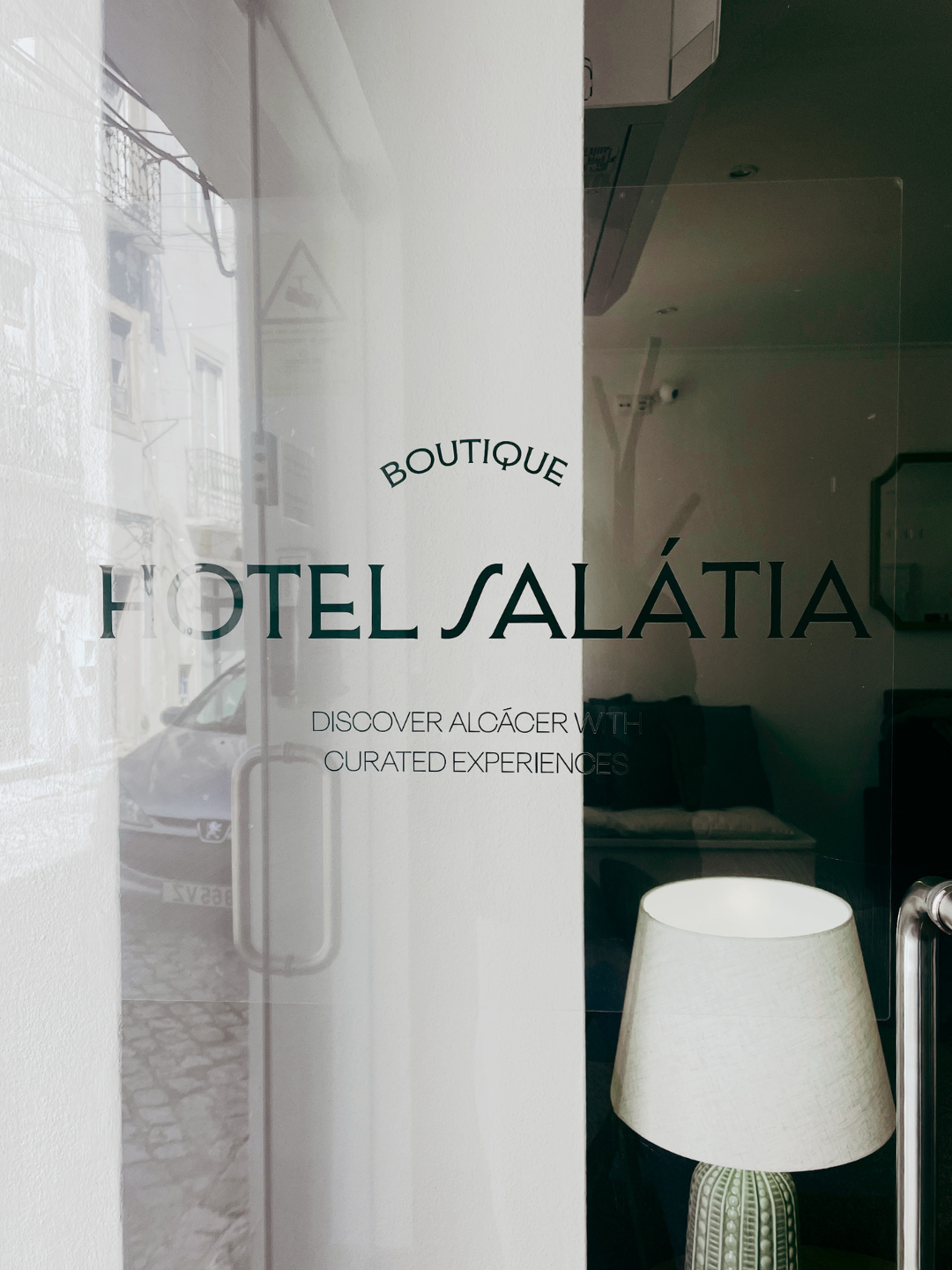
Example: Hotel Salátia in Alcácer do Sal positions itself as "the gateway." Not the main attraction, but the thoughtful starting point that helps curious travellers discover the town. That clarity shaped every branding decision, from the calm visual identity to the curated local maps we designed for guests.
2. Know Your Ideal Guest (Be Specific)
"Everyone" is not your target market. The clearer you are about who you're designed for, the easier everything becomes.
Portuguese boutique hotels typically attract:
- International travellers (30-55) seeking authentic experiences over tourist traps
- Portuguese weekend escapers from Lisbon/Porto looking for calm
- Remote workers combining work and travel
- Design-conscious travellers who value aesthetics and attention to detail
- Wellness seekers wanting digital detox and nature connection
Choose one or two of these. You can't be everything to everyone.
3. Define Your Brand Values
What matters to you as a hotel owner? What should guests feel when they stay with you?
Strong boutique hotel brands in Portugal often centre on:
- Place-based authenticity: Deep connection to Portuguese culture, local producers, regional traditions
- Thoughtful simplicity: Calm, uncluttered spaces that let guests breathe
- Sustainable practice: Respect for the environment, local economy, and slow tourism
- Human connection: Personal service, genuine hospitality, shared stories
4. Pick 3-4 core values that guide every decision.

Find this project: Casas da Boavista

Step 2: Build Your Visual Identity
Your visual identity should communicate your brand strategy at a glance.
1. Logo & Brand Mark
Your hotel logo needs to work across multiple applications: Website header, Instagram profile, Booking.com listing, Physical signage, Guest stationery, Merchandise.
For Portuguese boutique hotels, successful logos usually:
- Reference place (regional symbolism, local history, architectural details)
- Feel timeless rather than trendy
- Work in one colour (for embossing, stamping, simple signage)
- Scale up and down gracefully
Avoid clichés: generic serif fonts, clip-art illustrations of Portuguese tiles, literal sun/sea imagery. These scream, "I didn't invest in proper branding."
2. Colour Palette
Your colour choices set the emotional tone before a word is read.
Portuguese hotel colour palettes often draw from:
- Alentejo: Warm ochres, terracotta, olive green, cream (earthy, grounded)
- Coastal: Deep blues, seafoam, sandy beige, white (fresh, open)
- Lisbon/Urban: Bold jewel tones, charcoal, metallic accents (sophisticated, design-forward)
- Douro/Wine Country: Deep burgundy, forest green, gold, stone grey (rich, historic)
Pick 3-4 colors that reflect your location and brand personality. Test them across digital (website, social) and physical (interiors, print) before committing.
3. Typography
Fonts matter more than you think. They're the quiet voice of your brand.
Serif fonts (like Freight, Freight Display, Canela) = classic, refined, literary
Sans-serif fonts (like Montserrat, Inter, Söhne) = modern, clean, approachable
Custom/Display fonts = distinctive, memorable, but use sparingly
Most boutique hotels pair one serif (headings) with one sans-serif (body text). This creates visual hierarchy and sophistication without overwhelming.
4. Brand Photography Style
Photos are your most powerful marketing tool. But they need consistency.
Define your photography guidelines:
- Natural light vs. moody/atmospheric? Bright and airy communicates openness; darker tones create intimacy
- People in photos or empty spaces? Lifestyle shots feel welcoming; architectural shots emphasise design
- Staged vs. candid? Styled moments feel curated; organic captures feel authentic
- Colour grading? Warm tones, cool tones, or natural? This affects Instagram cohesion
Portugal-specific tip: Leverage golden hour. The Portuguese light, especially in Alentejo and Algarve, is world-famous. Shoot during magic hour (sunrise/sunset) for images that look expensive even on a budget.
Step 3: Design the Guest Experience (Where Branding Lives)
Your brand isn't what's on your website. It's what guests experience when they arrive.
1. Pre-Arrival
Branding starts the moment someone books:
- Confirmation email: Does it feel like your brand, or a generic Booking.com template?
- Pre-arrival communication: Do you send a thoughtful welcome message with local tips?
- Booking process: Is it easy, or do guests have to call/email for basic info?
Simple win: Create a branded email template with your colours, fonts, and tone of voice. Every touchpoint reinforces the brand.
2. Arrival & Check-In
First impressions = everything.
Strong branded touchpoints:
- Welcome drinks served in branded glassware
- Personalised welcome note on quality stationery
- Room key with custom holder/tag
- Welcome basket with local products (Portuguese olive oil, regional wine, artisan soap)
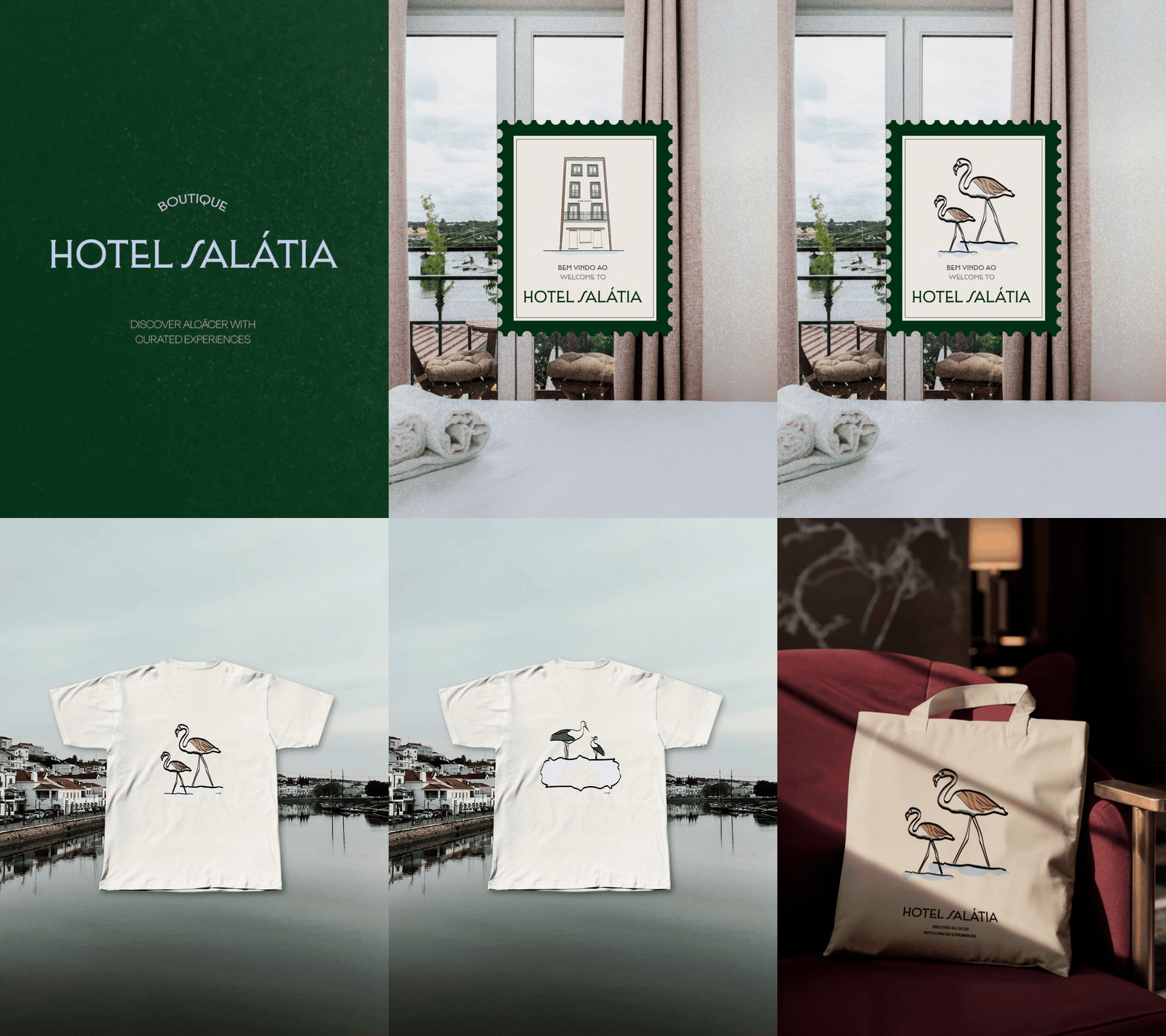
Hotel Salátia example: We designed a complete welcome pack system: branded wine labels, postcards introducing Alcácer do Sal, hand-drawn maps highlighting local restaurants, and a welcome book explaining the brand story. Every element reinforced the positioning: "We're your thoughtful guide to this town." Full case study here.
3. In-Room Experience
Guests spend most of their time in the room. This is where branding meets design.
Branded applications:
- Stationery set (notepads, pens, postcards)
- Bathroom amenities with custom labels
- Coffee/tea service with branded cups or packaging
- Room directory/information book
- Hangers, laundry bags, slippers with logo embroidery
- Minibar items with branded packaging
Don't go overboard. A few high-quality branded items > dozens of cheap logo items.
4. Social Spaces & Amenities
Common areas should reinforce your brand story:
- Curated library with books about the region
- Art from local Portuguese artists
- Music playlists that match your brand personality
- Signage that's helpful but not corporate
- Scent branding (consistent candles or diffusers)
5. Check-Out & Post-Stay
Branding continues after they leave:
- Thoughtful check-out gift (local honey, branded tote, postcard set)
- Follow-up email that doesn't feel automated
- Easy way to share feedback
- Incentive for return visits or referrals
Step 4: Build Your Digital Presence
Your website and social media are often the first interaction with your brand.
1. Website Essentials for Portuguese Hotels
Your website needs:
- Visual hierarchy: Hero image that captures your essence, clear navigation, strong CTAs
- Location context: Help guests understand where you are (many international travellers don't know Portuguese geography)
- Room types clearly explained: Photos, amenities, sizing, pricing
- Local area guide: What makes your region special? Why visit?
- Direct booking incentive: Give people a reason to book direct vs. Booking.com
- Mobile-first design: 70%+ of hotel searches happen on phones
Technical must-haves:
- Fast loading speed (under 3 seconds)
- Portuguese + English versions (minimum)
- Booking engine integration
- SEO optimization for "[your region] boutique hotel"
2. Instagram Strategy for Hotels
Instagram is where guests discover you. Successful Portuguese hotel accounts:
- Post 3-5x per week consistently
- Mix room shots, location highlights, guest experiences, food/drink, behind-the-scenes
- Use Stories to show real-time updates, Q&As, local tips
- Create Reels showing the property, area, or unique experiences
- Engage with travel/design accounts that align with your brand
3. Google Business Profile Optimisation
Many travellers find hotels through Google Maps. Optimise your profile:
- Accurate name, address, phone, website
- Complete business category: "Boutique hotel" or "Bed & breakfast"
- High-quality photos (at least 10-15)
- Detailed description with keywords: "boutique hotel in [location]"
- Regular posts/updates
- Respond to every review (positive and negative)
Step 5: Marketing Your Branded Hotel
Brand clarity makes marketing infinitely easier. You know who you're talking to, what matters to them, and how to reach them.
1. Channel Strategy for Portuguese Hotels
Booking.com/Expedia: Necessary for visibility, but expensive (15-20% commission). Use for discovery, incentivise direct bookings for returns.
Direct bookings: Your goal. Build an email list, offer direct booking perks (free upgrade, late checkout, welcome drinks).
Instagram/Social: Primary discovery channel for design-conscious travellers.
Google Ads: Target specific search terms like "boutique hotel [your region]" or "where to stay [nearby attraction]".
Partnerships: Collaborate with Portuguese travel bloggers, design publications, and lifestyle brands aligned with your values.
2. Content Marketing
A blog helps with SEO and positions you as a regional expert:
- "10 Hidden Restaurants in [Your Area] Only Locals Know"
- "Complete Guide to [Regional Experience]"
- "Why [Your Region] Should Be Your Next Portuguese Destination"
- "Sustainable Travel in Portugal: How We're Contributing"
Each post should target search terms travellers actually use.
3. Email Marketing
Build your list from day one:
- Collect emails at booking and check-in
- Send quarterly updates: seasonal offers, local events, new experiences
- Share insider tips only email subscribers get
- Personalise based on past stays
Email is your owned channel—no algorithm, no platform fees.
Step 6: Maintain Brand Consistency
Branding isn't a one-time project. It's a system that lives across every touchpoint.
1. Create Brand Guidelines
Document everything:
- Logo usage rules (minimum sizes, clear space, what NOT to do)
- Colour codes (RGB, CMYK, Pantone, hex)
- Typography with hierarchy examples
- Photography style with good/bad examples
- Tone of voice with sample copy
- Application examples (business cards, social posts, signage)
This ensures consistency as your team grows or you work with external vendors (photographers, designers, marketers).
2. Train Your Team
Your staff are brand ambassadors. They need to understand:
- What your brand stands for
- Who your ideal guest is
- How to communicate in your brand voice
- Why consistency matters
Host quarterly brand workshops. Review what's working, what's not, and how to improve.
3. Audit Regularly
Every 6 months, review all brand touchpoints:
- Website still reflecting brand accurately?
- Social media feed cohesive?
- Physical materials (stationery, signage) in good condition?
- Staff communicating consistently?
- Reviews mentioning brand values?
Small inconsistencies add up. Catch them early.
Extra: Common Branding Mistakes Portuguese Hotels Make
1. Copying competitors instead of finding their own voice: Just because other Algarve hotels use blue and white doesn't mean yours should too.
2. Designing for themselves, not their guests: Your personal taste doesn't matter. Your ideal guest's preferences do.
3. Underinvesting in photography: Bad photos kill conversions. Budget for professional photography.
4. Inconsistent brand application: Beautiful website, terrible Booking.com profile. Thoughtful interiors, cheap printed materials. Consistency is everything.
5. No brand strategy, just aesthetics: Pretty logo without clear positioning = wasted investment.
6. Forgetting about Portuguese vs. international audiences: Your brand needs to work for both markets, often in two languages.
7. Not leveraging local authenticity: Portugal's appeal is its culture, landscape, traditions. Generic "boutique hotel" branding wastes this advantage.
TIP: When to Hire Professional Branding Help
DIY branding can work for very small guesthouses with limited budgets. But most boutique hotels benefit from professional help.
Hire a branding studio when:
- You're launching or seriously rebranding
- You're competing in a saturated market (Lisbon, Porto, Algarve coast)
- You want to increase direct bookings and reduce OTA dependency
- Your brand doesn't reflect the quality of your hotel
- You're expanding (second location, new services)
What to expect investment-wise:
- Brand strategy + visual identity: €2,500-6,000
- Brand + website: €4,000-8,000
- Complete brand system (strategy, identity, website, video, applications): €5,000-8,000+
This isn't an expense, it's an investment. Strong branding increases ADR (average daily rate), occupancy, and direct booking percentages. Good branding pays for itself quickly.
Final Thoughts: Your Hotel Brand Is a Living System
Branding a boutique hotel in Portugal isn't about following a checklist. It's about building a system that clearly communicates what you stand for, who you serve, and why you matter.
The best hotel brands feel inevitable. When guests arrive, everything makes sense. The visual identity, the experience, the values, it all connects. That coherence comes from strategic clarity, not creative guesswork.
Whether you're launching a new hotel in the Algarve, rebranding a historic property in the Douro, or differentiating your Alentejo guesthouse from the competition, the process is the same: strategy first, design second, consistency always.
Ready to brand your Portuguese hotel? We've helped hotels, airbnbs and rentals across Portugal, from Alcácer do Sal to the coastal Algarve build brands that attract the right guests and increase direct bookings.
---
Related Resources:
- View our Hotel Salátia case study to see our complete boutique hotel branding process
- Our Branding and Video projects for hospitality businesses
