
How We Transformed a Portuguese Boutique Hotel From Concept to Confident Brand: The Hotel Salátia Story
What happens when a hotel has great vision but no voice? We spent 3 months finding out, and the lessons apply to any hospitality brand ready to stop blending in.
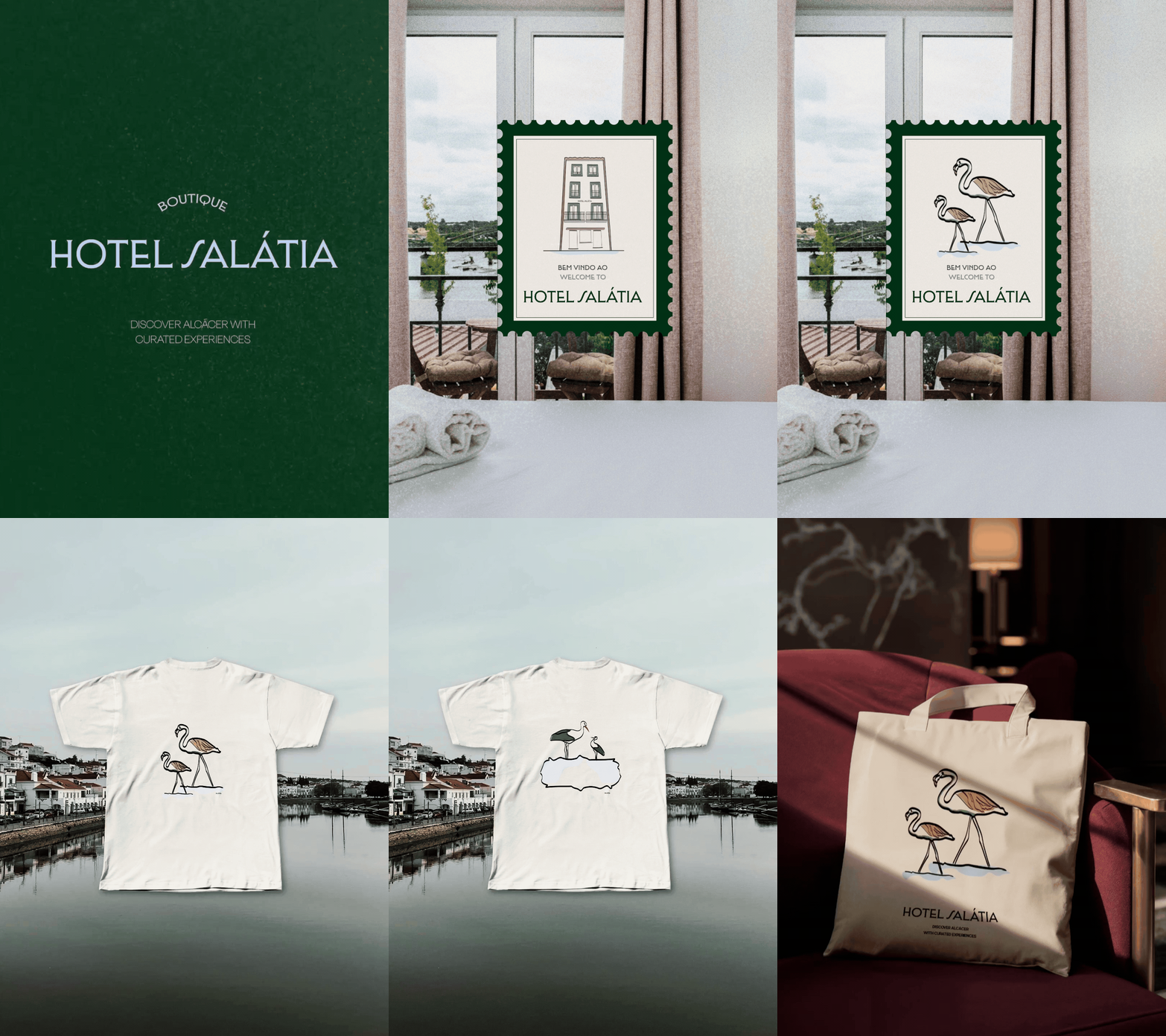
There's a moment in every branding project where everything clicks.
For Hotel Salátia, it happened during a conversation about why the hotel exists at all. Not the business plan answer, the real answer: "We're not trying to compete with Lisbon. We want people to actually feel Alcácer do Sal. To leave changed, not just rested."
This thought became the entire brand strategy.
But getting there? That took work. And what we learned while building Salátia's brand holds valuable lessons for anyone running or launching a boutique hotel, guesthouse, or tourism business.
Here's what happened, what we learned, and how you can apply these insights to your own property.
Most boutique hotels, guesthouses, and vacation rentals make the same mistake: they start with design and hope the strategy figures itself out.
A mood board here. A logo there. Maybe some pretty Instagram photos. Then they wonder why bookings aren't coming in, why they're competing on price with Airbnb, or why guests can't articulate what makes them different.
We see this constantly. Beautiful properties with zero brand clarity.
That was Hotel Salátia's reality when they came to us. Stunning location overlooking the Sado River in Alcácer do Sal. Thoughtful concept. Clear vision about being a "gateway to the Alentejo" rather than just accommodation. But when we asked basic questions "Who is this for?" "Why would someone choose you over Lisbon?", silence.
Three months later, they had a complete brand system that positions them clearly, attracts their ideal guests, and gives them confidence to grow.
Read the full case study here →
So what was the process we followed with Salátia? Here's the exact methodology, broken into five steps you can apply to your own property.
Step 1: Answer the Hard Questions Before You Touch Design
Most branding projects skip this step entirely. They jump straight to Pinterest boards and colour palettes. That's why most hotel brands look the same.
We spend the first 2-3 weeks in strategic discovery, asking questions that make clients uncomfortable:
Why does your property exist beyond making money?
What problem are you actually solving for travellers?
If you disappeared tomorrow, what would your guests miss?
What do you offer that literally no one else in your area does?
For Salátia, the breakthrough came when the owner said: "We want people to actually feel Alcácer do Sal. To leave changed, not just rested."
That became their entire positioning: not a destination that contains guests, but a gateway that connects them to the town.
The 3 Questions You Must Answer:
Purpose: Why do you exist? (Not "to provide accommodation"—dig deeper)
Audience: Who is this really for? (Be specific. "Couples 30-50" isn't enough. What do they value? What are they running from? What are they running toward?)
Differentiation: What makes you different from every Airbnb, hotel, and rental within 50km?
Write one clear sentence for each. If you can't, no logo will save you.
Step 2: Build a Psychological Profile of Your Ideal Guest
Here's where most hotels get it wrong: they define their audience by demographics when they should define them by psychographics.
We don't care that Salátia's guest is "35-55, middle to upper income." That's not useful. What we care about:
They value quality of life over luxury signalling
They want slow travel, not quick hits
They're confident enough to explore lesser-known places but want a trusted starting point
They'd rather have a genuine local meal than a Michelin star
They measure success by how enriched they feel, not how many photos they got
See the difference? This level of clarity shapes everything: your website copy, your Instagram content, your pricing strategy, even your welcome amenities.
Your Turn:
Stop describing your guests by age and income. Instead, answer:
What do they value?
What are they escaping?
What would make them choose you over somewhere "safer" or more famous?
How do they measure a successful trip?
Once you know this, you know how to speak to them.
Step 3: Make Every Design Decision Strategic
Now you can start designing. But here's the rule: every visual choice must reinforce your positioning.
For Salátia:
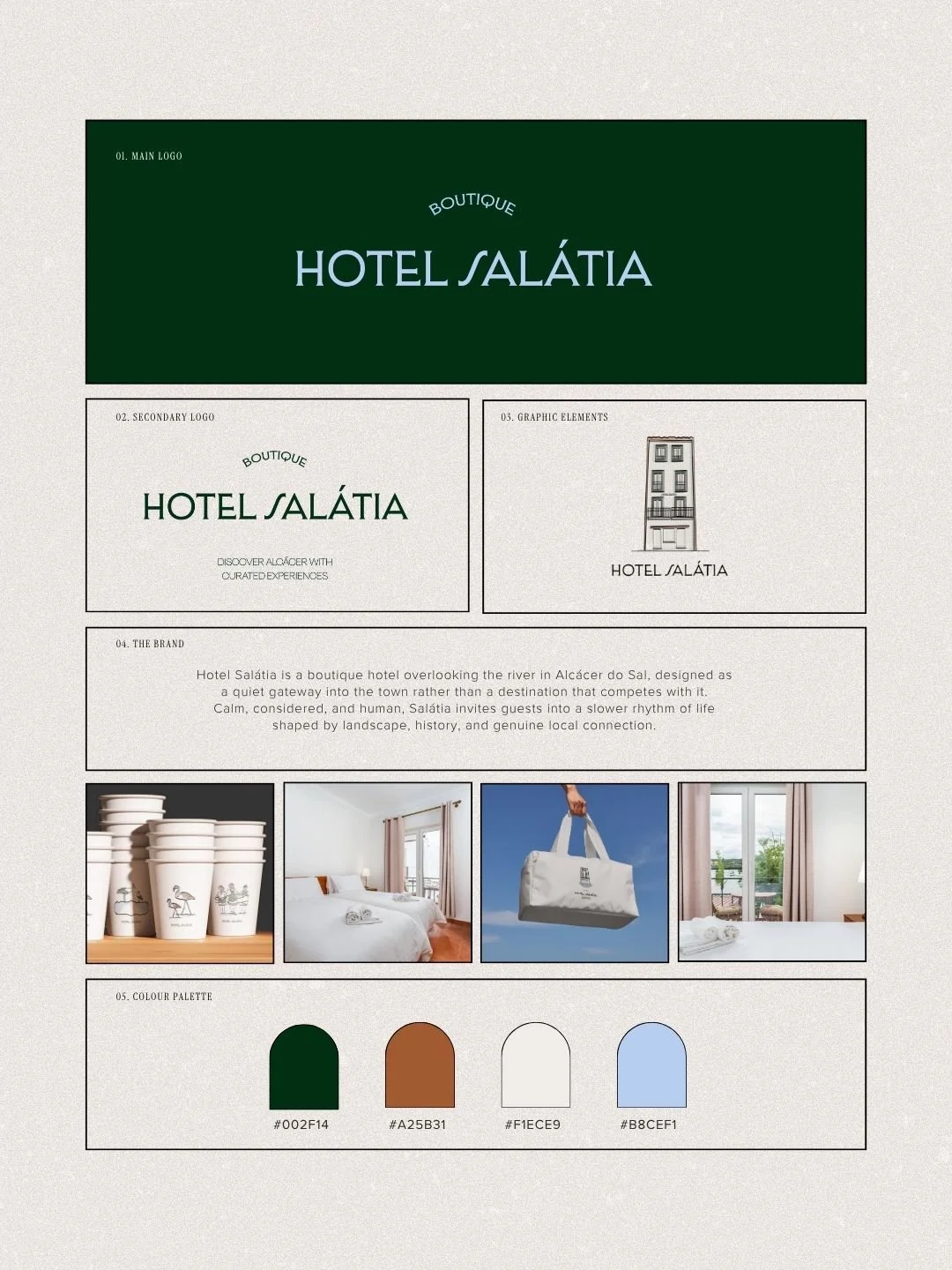
Typography: Balances modern and classic. Grounded, not trendy. Timeless, not trying too hard.
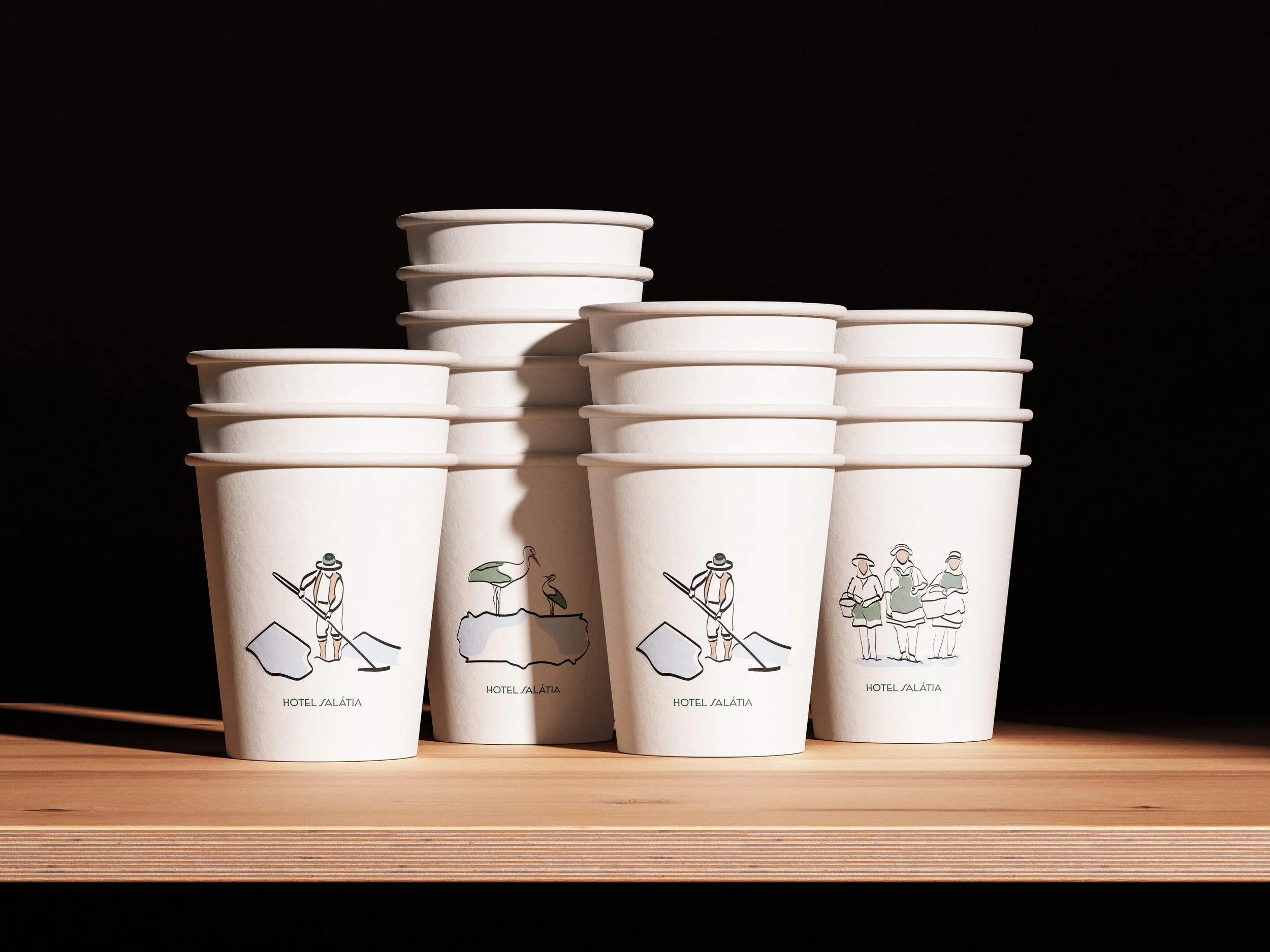
The slanted "S" in the logo: Movement. Like a bird in flight. Subtle nod to the flamingos and storks that define the region.
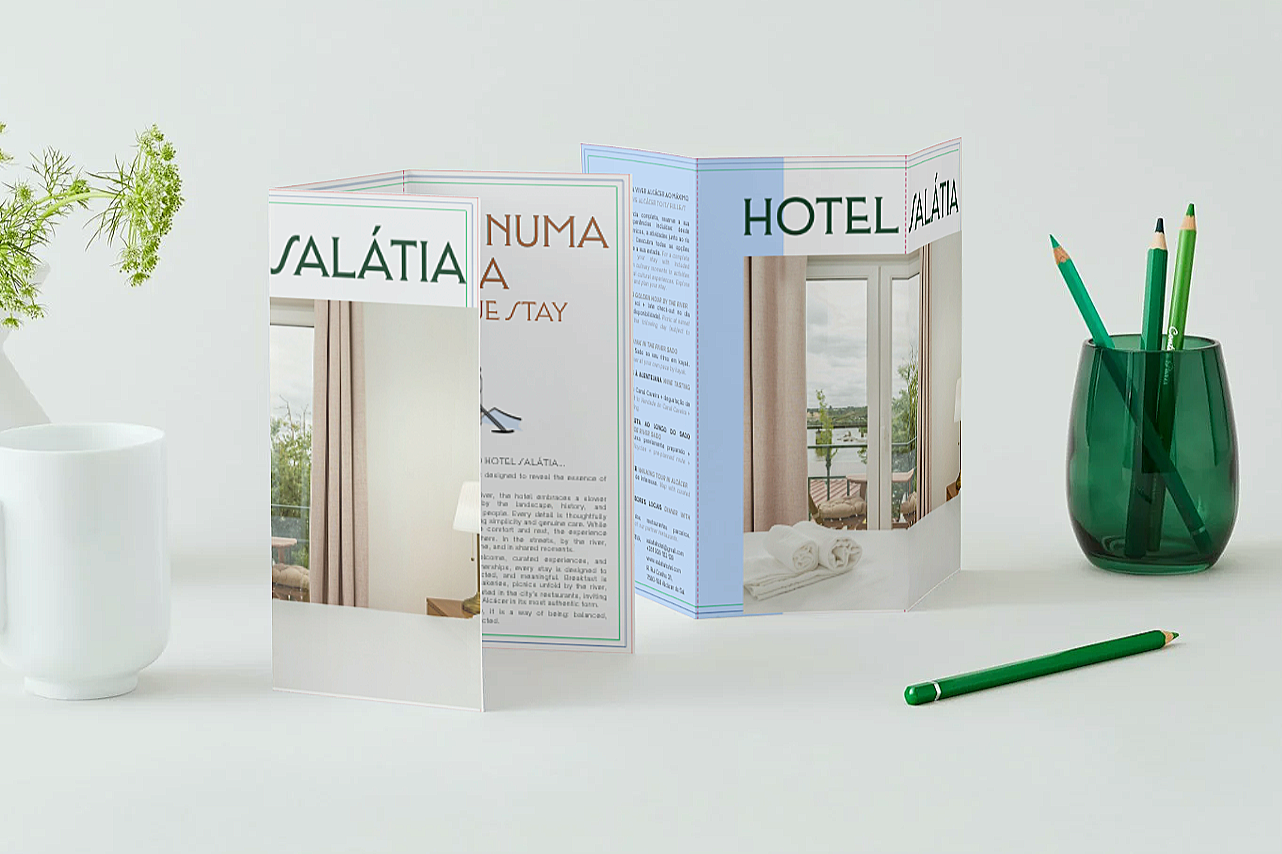
Colour palette: Deep green (Alentejo landscape), warm coral (human warmth, sunset over the river), soft cream (space to breathe), sky blue (water, openness).
None of this was chosen because "we like these colours." Every choice communicates something about the brand's values.
Compare that to most boutique hotels: black + white + one trendy accent colour that says absolutely nothing.
Your Turn:
Before you choose colours, fonts, or imagery, ask:
What do we want people to feel about this brand?
Does this design choice reinforce that feeling?
Would our ideal guest respond to this, or are we designing for ourselves.
If you're choosing design elements because "I like it," stop. Design should be strategic, not personal preference.
Step 4: Brand Every Single Touchpoint (Not Just the Logo)
Most small properties think brand = logo. Wrong. Your brand is every interaction someone has with your business:
Instagram bio
Booking confirmation email
Check-in experience
Room key design
Bathroom amenities
Checkout message
Follow-up email
If these don't feel cohesive, your brand falls apart.
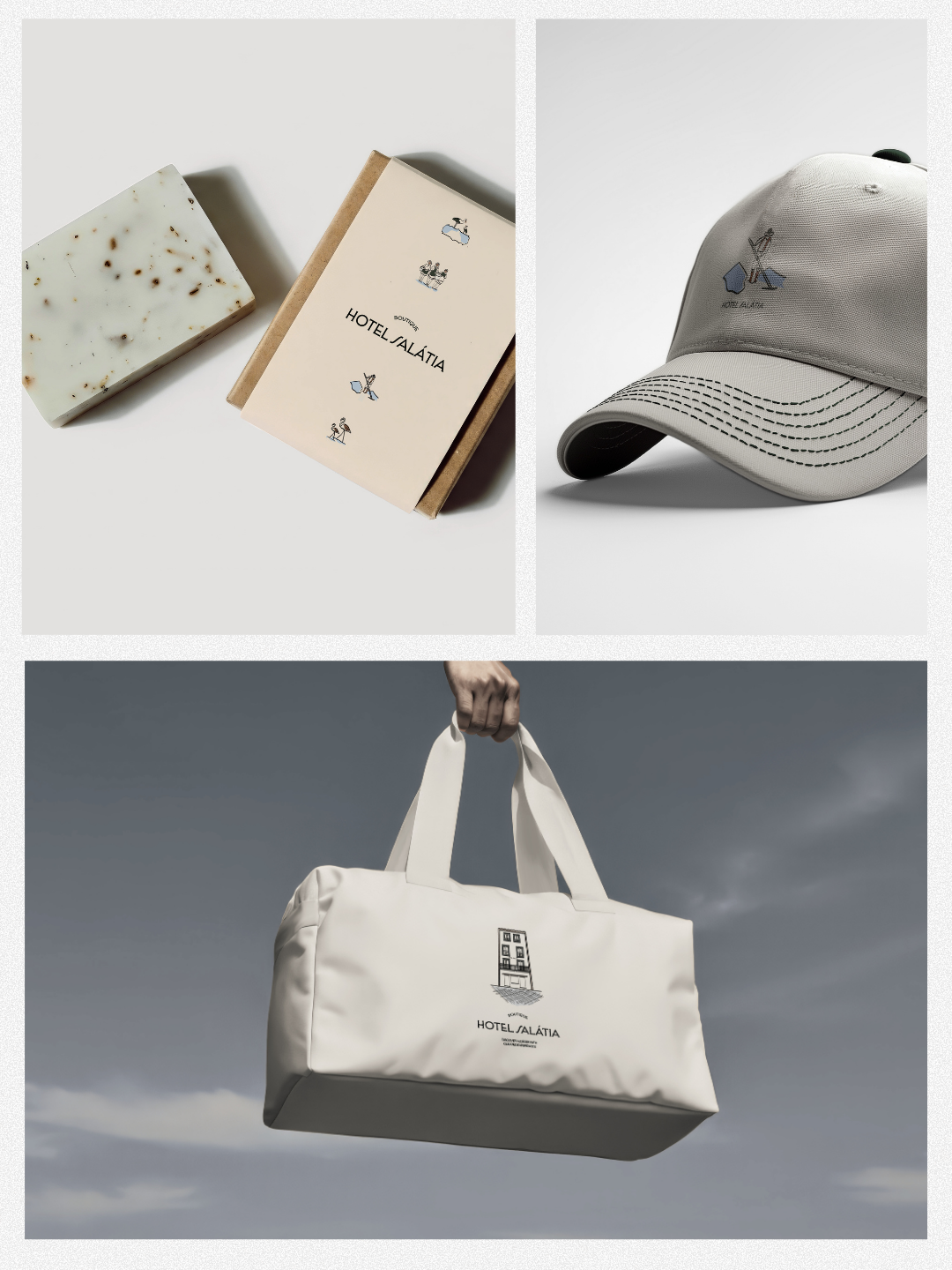
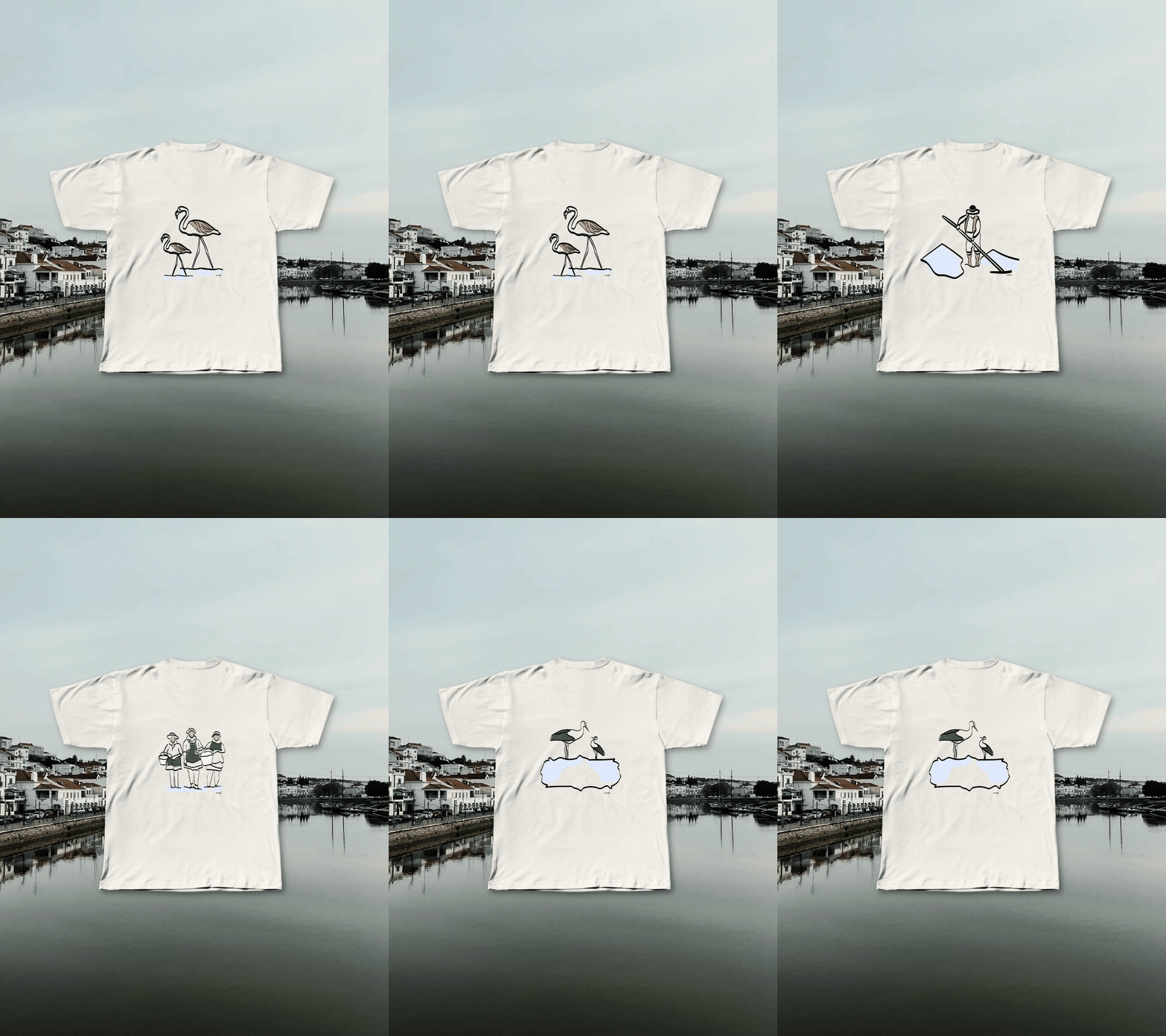
For Salátia, we designed:
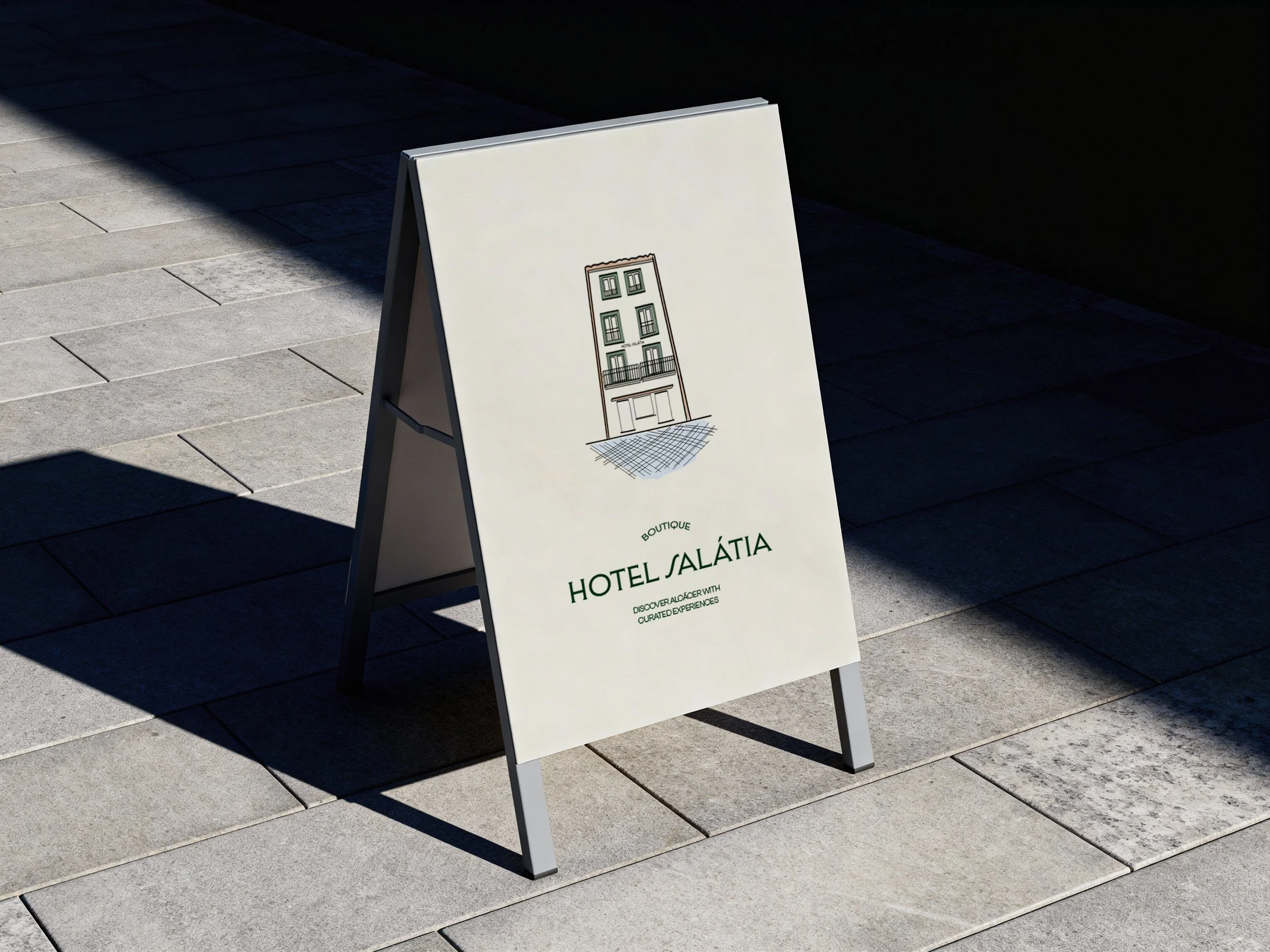
Print collateral (business cards, thank-you notes, curated local maps)
Merchandise people actually want to wear (tote bags, t-shirts with artistic brand marks)
In-room amenities (branded welcome packs with local products)
Guest experience packages (3 signature itineraries that position them as experience curators)
Interior design direction (how the brand lives in the physical space)
Social media strategy (content pillars, posting calendar, photography guidelines)
Every touchpoint reinforces the same message: thoughtful, local, quality, gateway.
Your Turn:
List every single place someone interacts with your brand. Then audit:
Does each touchpoint feel like it comes from the same brand?
Are there gaps where the experience breaks down?
Where are you currently diluting your identity?
Fix the inconsistencies before you spend another euro on marketing.
Step 5: Document Everything in Brand Guidelines
This is where most projects fail. The designer hands over some files, maybe a PDF, then disappears. Six months later, the brand looks completely different because no one knows how to use it.
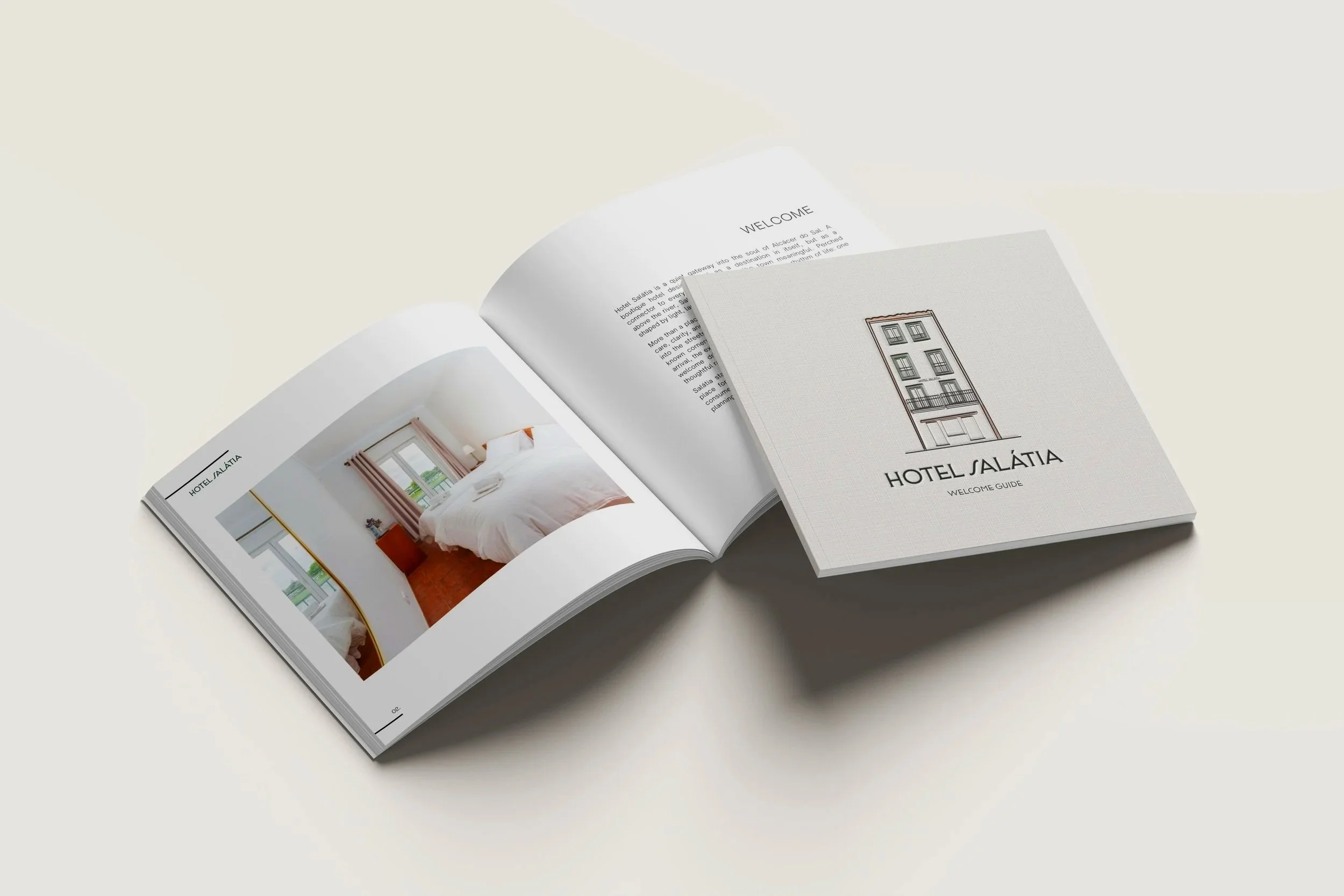
For Salátia, we created brand guidelines covering:
Brand strategy (purpose, mission, audience, voice)
Visual identity system with usage rules
Typography and color specifications
Logo placement and minimum sizes
Do's and don'ts for maintaining integrity
Voice and tone for copywriting
This isn't a file that lives on someone's desktop. It's a living resource the team uses daily: New hire? Give them the guidelines. Working with a photographer? Share the guidelines. Designing a new experience? Check the guidelines.
Your Turn:
Even a basic 10-page guide is better than nothing. Document:
Logo usage rules
Colour codes (hex, RGB, CMYK)
Typography choices
Voice and tone examples
Common mistakes to avoid
Make it accessible. Use it. Update it as you grow.
The Results: What Changes When You Follow This Process
After three months, Salátia had more than a pretty logo. They had:
✅ Clear positioning that differentiates them from Airbnb and generic boutique hotels
✅ Visual identity that works across 50+ touchpoints
✅ Guest experience packages that justify premium pricing
✅ Social media strategy with 3 months of content ready to go
✅ Brand confidence—they can now make decisions through the lens of "Does this feel Salátia?"
But the real transformation? The team now understands their own brand. They're not guessing anymore.
That's what strategic branding does. It creates a framework for every future decision.
This Process Works for Any Hospitality Brand
We've used this process for hospitality, lifestyle, design brands and more. Whether you're a 6-room guesthouse, a 30-room boutique hotel, or repositioning an existing property, the framework is the same:
1. Strategy before aesthetics: Answer why you exist, who you serve, and what makes you different.
2. Know your guest psychologically: Go beyond demographics. Understand values, motivations, and desires.
3. Make design strategic: Every visual choice should reinforce your positioning.
4. Brand every touchpoint: Consistency across all the places guests interact with you.
5. Document and maintain: Guidelines ensure the brand stays cohesive as you grow.
Skip any of these steps, and you're building on shaky ground.
Ready to Apply This to Your Property?
You have two options:
Option 1: Take this framework and DIY your branding. It's possible, just time-consuming and requires brutal honesty about your own business.
Option 2: Work with someone who's done and knows exactly where hospitality brands get stuck.
If you're tired of competing on price, tired of blending in with Airbnb, tired of guests not understanding what makes you special: this process is the solution.
And if you can’t do it all on your own:
Let's uncover what makes your property special, then build a brand that shows the world.
-
Studio V&H | Strategic Branding for Boutique Hospitality
Boutique hotels • Guesthouses • Tourism experiences • Vacation rentals
